


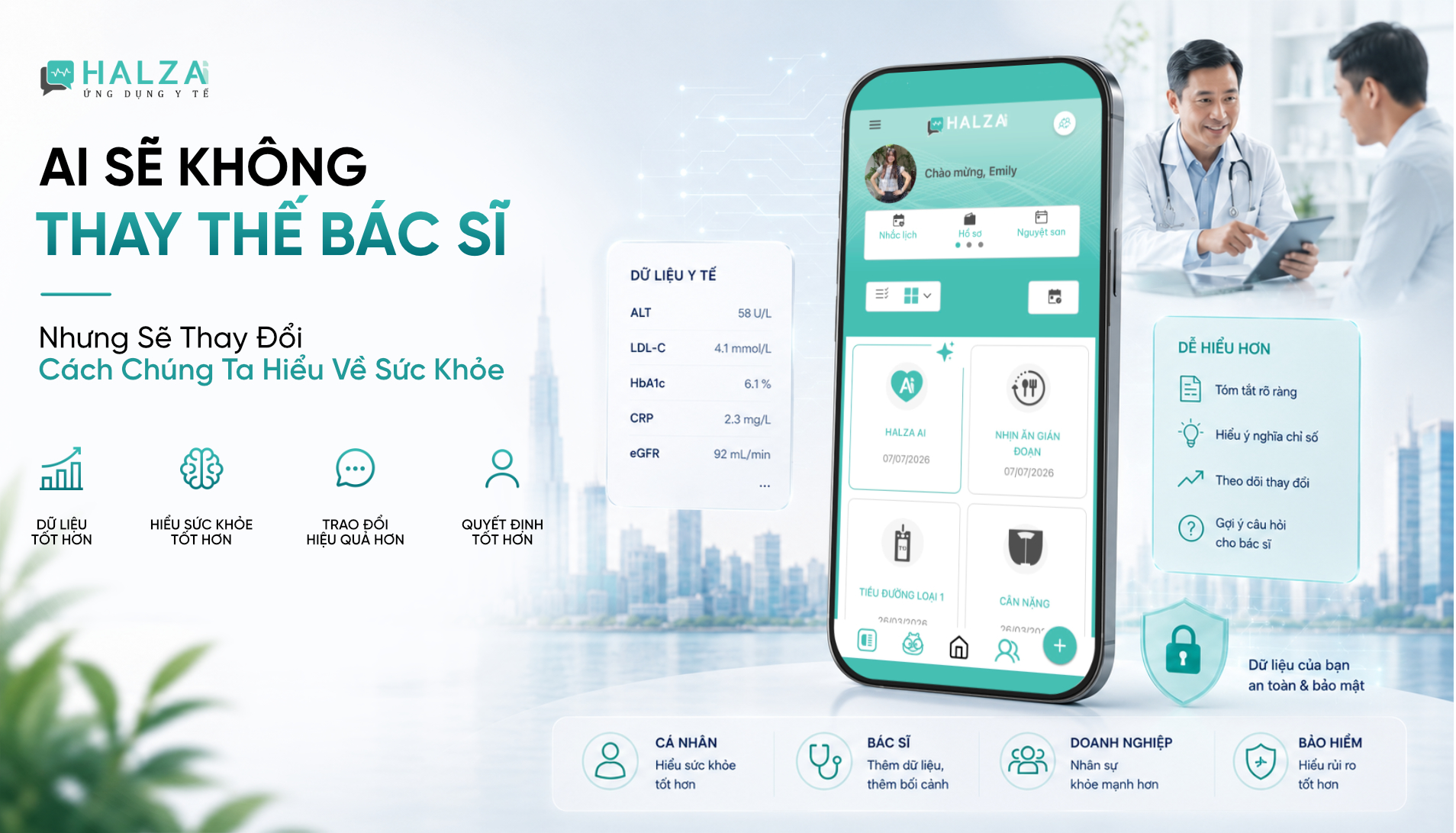

“The real value of AI in healthcare does not lie in replacing expertise. It lies in the ability to turn complexity into clarity.”
Healthcare is generating more data than ever before
Test results. Medical records. Imaging. Prescriptions. Smart wearables. Years of health history.
But having more data does not mean we understand our own health any better.
For most people, the challenge is no longer access to information.
It is understanding what that information means.
AI Can Close the Information Gap
A medical report can contain dozens of measurements and clinical terms.
Doctors understand what they mean within a broader clinical context. Most patients do not.
AI can help close this gap by organising complex information, explaining medical terminology in plainer language and identifying changes in health records over time.
A single result is only a snapshot.
Long-term health data tells a story.
This is where AI becomes especially valuable: not as the final decision-maker, but as a layer of intelligence connecting complex health data with human understanding.
The Future Is Not “AI vs. Doctors”
Medicine demands things that technology cannot simply automate: clinical judgement, professional responsibility and human context.
A more fitting model is therefore:
Patient + AI + Doctor
AI structures the information.
The patient is better informed.
The doctor makes the clinical decisions.
WHO – Artificial Intelligence for Health consistently emphasises the importance of human oversight, safety, transparency and responsible governance as AI becomes ever more deeply integrated into healthcare.
Why Does This Matter Beyond Healthcare?
For business leaders, the impact of this reaches well beyond the hospital.
Health increasingly has a direct bearing on workforce productivity, employee wellbeing, insurance costs and organisational resilience.
When individuals understand their own health better, they can seek care earlier, manage health risks proactively and communicate more effectively with healthcare professionals.
This reflects a broader shift:
Reactive care → Preventive care → Intelligent health care
And AI can drive this shift forward faster.
Where Does Halza Fit In?
This thinking is also part of the direction taken by Halza.
Halza brings personal health records, medical information and health management tools together in a single digital environment.
AI adds a further layer of value: helping users access and understand increasingly complex health information, while healthcare professionals remain central to clinical decisions.
The goal is not:
AI replacing doctors.
It is:
Better data. Better understanding. More effective conversations with your doctor.
As AI becomes ever more sophisticated, the organisations with the greatest impact in healthcare may not be those seeking to remove people from the system.
They will be the organisations that know how to use technology to amplify the effectiveness of human expertise.
The future of healthcare is not artificial intelligence replacing human intelligence. It is human intelligence elevated by technology.
 Back to all articles


