


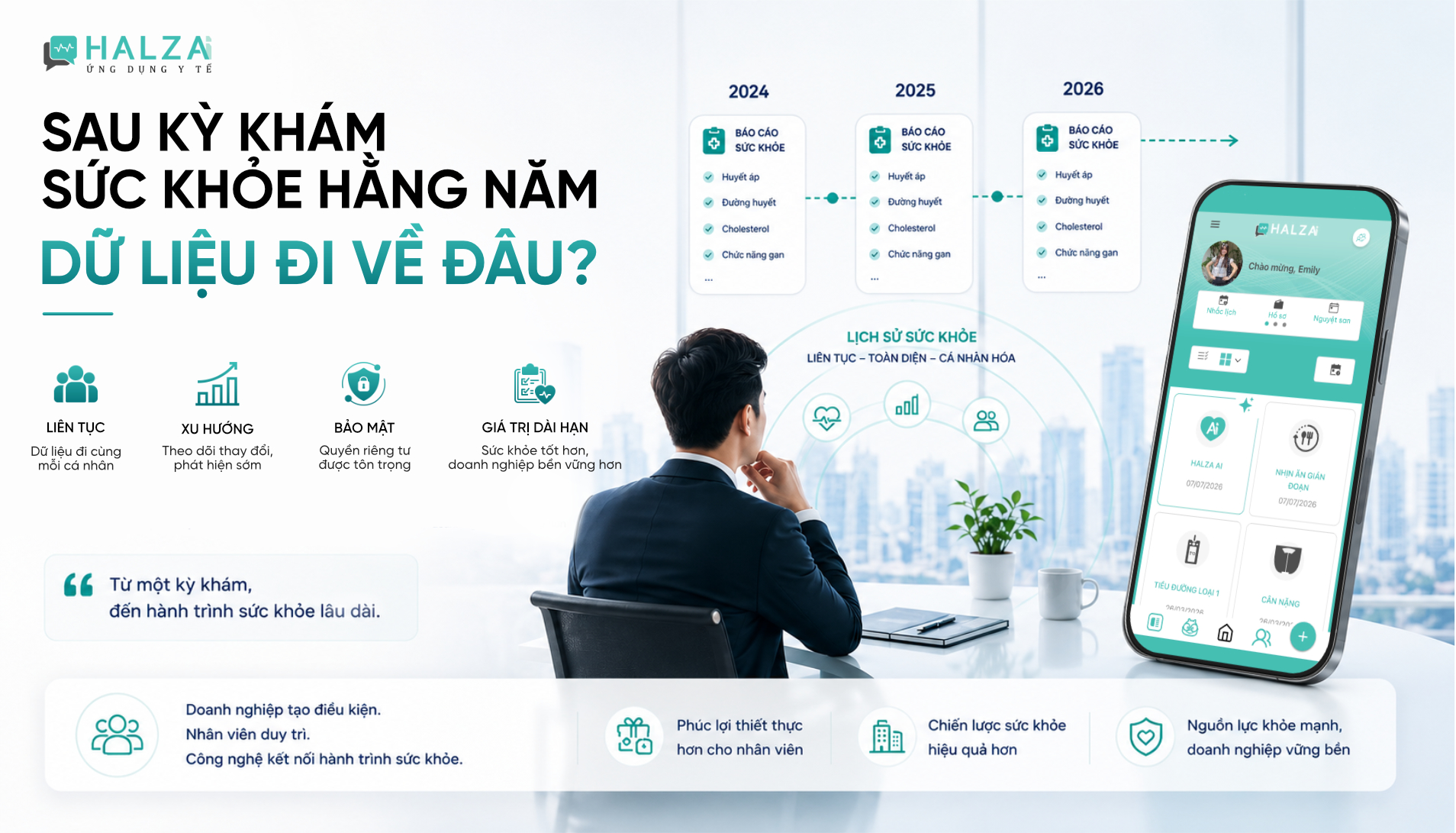

“Every health check-up generates valuable data. The question is: what happens to that data once the check-up is over?”
Every year, companies invest significantly in employee health check-up programmes.
Tests. Diagnostic imaging. Clinical examination. Health reports. Risks identified.
Then the programme ends.
12 months later, a new round of check-ups begins.
But where did last year’s health data go?
This may be one of the overlooked sources of value in corporate health strategy.
A check-up is a single snapshot. Health is a whole journey.
A periodic health check-up gives a picture of health at one point in time.
But the greater value may lie in connecting the results across the years.
2024 → 2025 → 2026
Is blood pressure rising?
Is blood glucose creeping towards the risk threshold?
Is cholesterol improving or getting worse?
Have the abnormalities found last year been followed up?
A single result shows only one moment in time.
Long-term health data shows the trend.
And the trend is the important foundation of preventive healthcare.
From “a check-up every year” to continuous health management
Periodic health check-ups for workers are an important part of the occupational health system in Vietnam.
But completing a round of check-ups and managing health over the long term are two different things.
A company can complete its annual health check-up programme while its employees’ results remain scattered across:
PDFs. Paper records. Hospitals. Laboratories. Different systems.
The strategic question is therefore not only:
“Has the company run its health check-ups this year?”
But also:
“After the check-up, how does the healthcare journey continue?”
A more connected model might look like this:
Periodic check-up → digital health record → follow-up → prevention → next check-up
Instead of starting again from scratch every year, each check-up becomes part of a long-term health history.
Why should CEOs and companies care?
Employee health is not only a benefits issue.
It is increasingly linked to:
Workforce productivity.
Sick days.
Insurance and medical costs.
Employee wellbeing.
The resilience of the workforce.
There is, however, a very important boundary.
Companies should not turn an employee’s personal medical record into HR management data.
Health information is sensitive data and needs to be protected by appropriate privacy, security and governance mechanisms.
The real opportunity lies in a different model:
Employees maintain the continuity of their own personal health record, while the company builds a more effective wellbeing strategy that still respects privacy.
This is the difference between managing health and managing employees’ data.
A health record should travel with the individual
Employees may change jobs.
Companies may change hospitals or health check-up providers.
Workers may also use many different medical facilities over the course of their lives.
But a health history should not have to start over every time the ecosystem changes.
Health data should travel with the individual — not depend on one company or one medical facility.
That creates continuity.
And continuity creates context.
What role does Halza play?
This is also one of the problems that Halza sets out to solve.
Instead of letting annual check-up results become isolated documents, Halza helps users manage their health information in a personal digital environment.
Over time, these results can build into a long-term health history — helping users track changes, keep important medical information and prepare better for their next conversations with a doctor.
For companies, this opens up a different approach:
From a “once a year” benefit → a continuous health journey.
The company creates access to healthcare services.
The employee retains control over, and the continuity of, their personal health information.
Technology connects that journey.
The bigger question for companies
Companies already invest significantly in employee healthcare every year.
The next opportunity may not lie in running more check-ups.
But in creating more long-term value from the health data already collected.
Because the most valuable outcome of a health check-up may not be the report an employee receives on the day.
It is the health history they are building for the years ahead.
 Back to all articles


