




When assisted reproductive technology is no longer a “rare” story
🤍 “Many people think IVF is the last resort.
But in modern medicine, what matters more is knowing where your own body stands — before it is too late.”
🌱 What is IVF?
- IVF stands for In Vitro Fertilisation, a method of assisted reproduction that combines egg and sperm in the laboratory before the embryo is transferred into the uterus.
- For many years, IVF was usually spoken of as a journey full of pressure.
- Today, however, with advances in modern medicine, IVF is gradually becoming a more common medical option — especially in Asian countries, where infertility rates are tending to rise.
- According to the World Health Organization (WHO), infertility affects about 1 in 6 adults worldwide at some point in their lives.
📉 Why are more and more young people having difficulty conceiving?
- Many experts believe that modern lifestyles are quietly affecting fertility in both men and women.
Some common factors include:
- 😴 Long-term lack of sleep
- 💼 Stress and high cortisol
- 🍷 Alcohol and tobacco
- 🍔 An unbalanced diet
- 📱 A sedentary lifestyle
- ⏳ Marrying and having children later
- ⚖️ Hormone disorders
- 🧬 PCOS or endometriosis
It is worth noting that:
- Many people look perfectly healthy yet still have problems with egg or sperm quality.
- According to Mayo Clinic, age is one of the factors that significantly affects fertility, particularly in women after the age of 35.
👩⚕️ Is IVF for everyone?
- The answer is: not quite.
- IVF is not always the first step.
In many cases the doctor may suggest:
- Tracking the ovulation cycle
- Adjusting hormones
- Lifestyle changes
- Treating the underlying cause
- IUI or other assisted methods before IVF becomes necessary
- The most important thing is not “whether or not to have IVF”.
It is:
👉 understanding your own reproductive health properly, as early as possible.
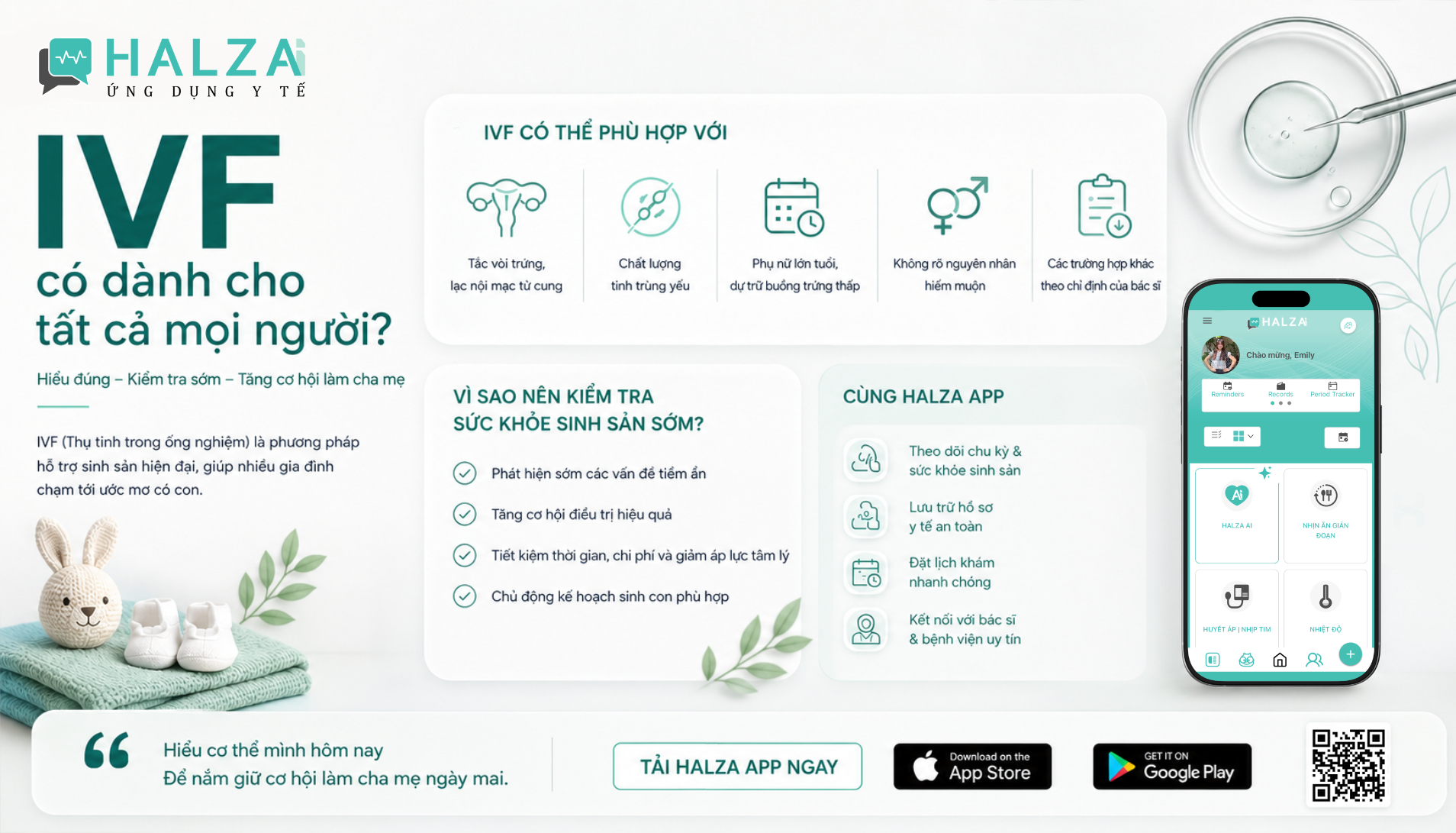
🧠 Signs that you should have your reproductive health checked early
You should consider being checked if:
- ⏳ You have been trying to conceive for more than 12 months without success
- 📅 Your menstrual cycle is irregular
- 🩺 You have a history of PCOS or gynaecological disease
- 💭 Prolonged stress and frequent sleeplessness
- 👨 The man has hormone or sperm quality problems
- 🎂 Women over 35 who want to have a child
- 🧬 A family history of reproductive conditions
- Many doctors believe that being checked early improves the chances of effective treatment and reduces psychological pressure later on.
🌍 How is modern IVF changing?
- Today, IVF is no longer an unfamiliar concept.
- Modern assisted reproduction centres now use:
- 🧪 Advanced embryo culture technology
- 🤖 AI-assisted embryo assessment
- 📊 Health data analysis
- 🧬 Genetic testing
- 📱 Remote health monitoring
- This gives many couples more opportunities and more options better suited to their own condition.
- According to Cleveland Clinic, personalising treatment protocols is improving the IVF experience for many patients.
💚 Reproductive health should not be a subject that gets put off
One of the hardest things for many couples is this:
- They usually only get checked after trying for far too long.
- Yet reproductive health is like cardiovascular or endocrine health — it needs regular, proactive monitoring.
- Understanding your body earlier is not about worrying.
It is about:
✨ having more choices
✨ more time
✨ and more opportunities
📲 Take charge of your reproductive health with the Halza App
With the Halza App, users can:
- 📅 Track their menstrual cycle
- 🤍 Follow their IVF journey & reproductive health
- 📁 Store electronic medical records
- 🩺 Book appointments quickly with the right hospital & doctor
- 🔔 Get reminders for regular appointments and tests
- 📊 Manage their health data in a single app
Halza aims at a modern healthcare experience:
- Simpler, more proactive and more personalised for every user.
✨ Conclusion
- IVF is not for everyone.
- But understanding your own reproductive health is for all of us.
- In a world where stress, hormones and lifestyles are changing very fast — being checked early can be one of the most important decisions for a family's future.
📚 Medical references
- World Health Organization (WHO)
- Mayo Clinic
- Cleveland Clinic
- American Society for Reproductive Medicine (ASRM)
 Back to all articles


