


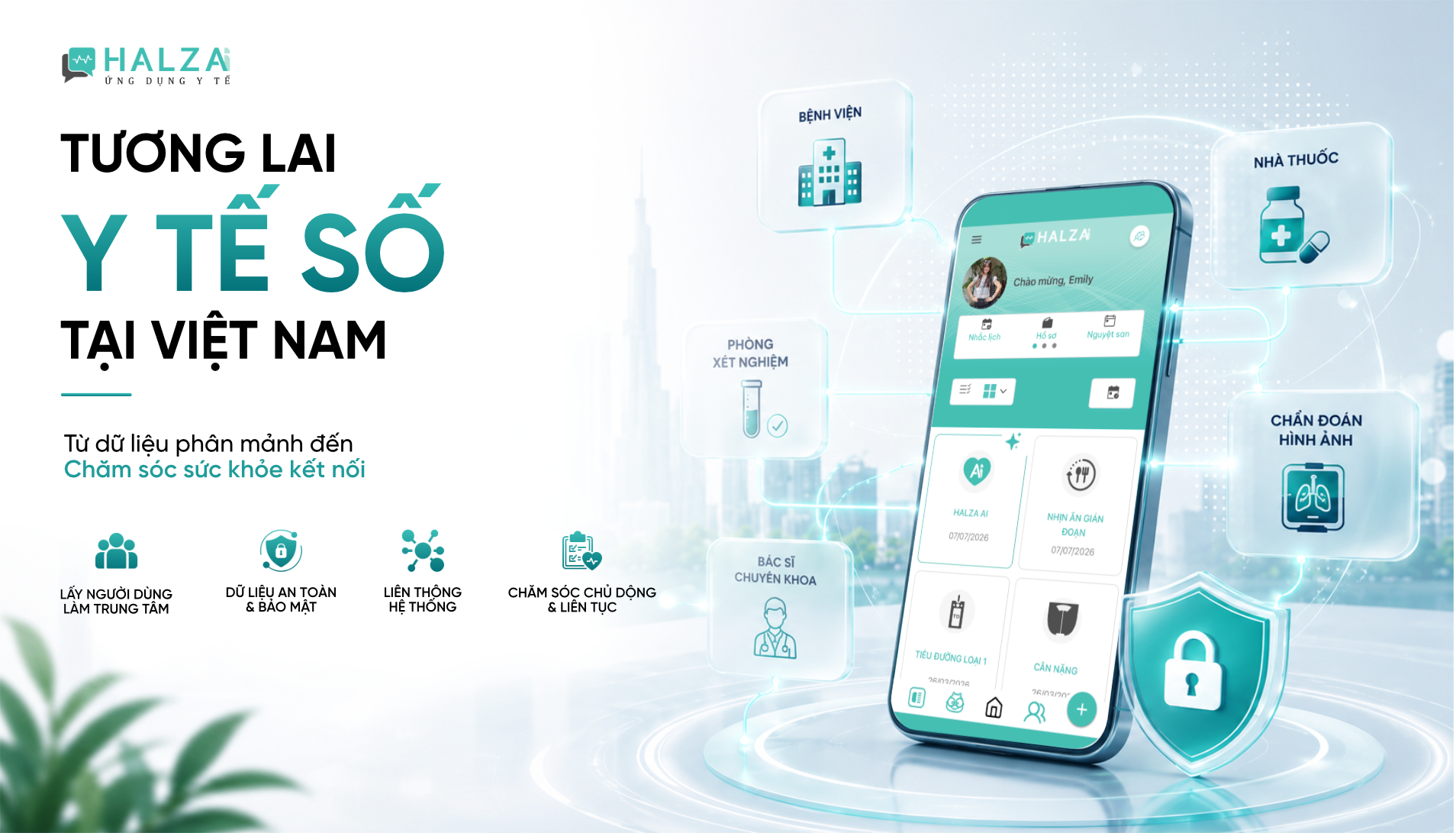

From fragmented data to connected healthcare
“The future of healthcare is not only about digitisation. The future lies in connection.”
Vietnam is moving quickly along its digital health transformation journey.
Electronic medical records, digital laboratory testing, remote consultations and AI are becoming ever more deeply embedded in the healthcare ecosystem.
There is, however, still one important problem to solve:
Health data has been digitised — but it is not always connected.
One person may have test results at one facility, imaging at another hospital, prescriptions from a specialist and years of medical history scattered across different systems.
The data already exists.
What is usually missing is the connection.
Going far beyond the story of “digitisation”
Moving medical records from paper to electronic form is only the first step.
The bigger opportunity lies in the ability to share data across systems – interoperability: allowing medical information to be exchanged safely and meaningfully between systems.
The World Bank has identified integration and interoperability as one of the key priorities in Vietnam's digital health development.
When systems can "talk to one another", the value created is not only operational efficiency
It is also:
Fewer duplicated procedures.
More complete clinical information.
More continuous care.
More importantly, this is the foundation for shifting from a model centred on the healthcare facility to a model centred on the patient.
From fragmented data to Connected Care
The shift can be pictured quite simply:

Instead of each consultation being a separate event, data can become part of a continuous health journey.
For users, this brings greater control and transparency in managing their health information.
For doctors, it means fuller context to support clinical decisions.
For businesses and health systems, connected data opens up the chance to develop models of care that are more effective, more preventive and more data-driven.
AI needs context, not just data
AI will certainly play an ever larger role in healthcare.
But the value of AI depends heavily on the quality, structure and context of the data.
A single test result gives us a snapshot at one moment in time.
Long-term health data tells us a story.
Applied responsibly to connected health data, AI can help identify trends, help people make sense of complex medical information and work towards more proactive health management.
WHO also stresses that the growth of digital health and AI in healthcare must go hand in hand with appropriate standards of safety, ethics and governance.
Where does Halza fit into this picture?
This is also the direction that Halza is pursuing.
Halza was built to help people bring their health information closer together — from medical records and test results to health management and access to healthcare services.
The aim is not to replace hospitals, laboratories or doctors.
It is to help connect the gaps between them.
Health data → Access to healthcare services → Continuous care
As Vietnam's healthcare ecosystem becomes increasingly digitised, the next advantage may not come from creating more data
But from connecting data better
And that may be one of the factors that shapes the next chapter of healthcare in Vietnam
 Back to all articles


