


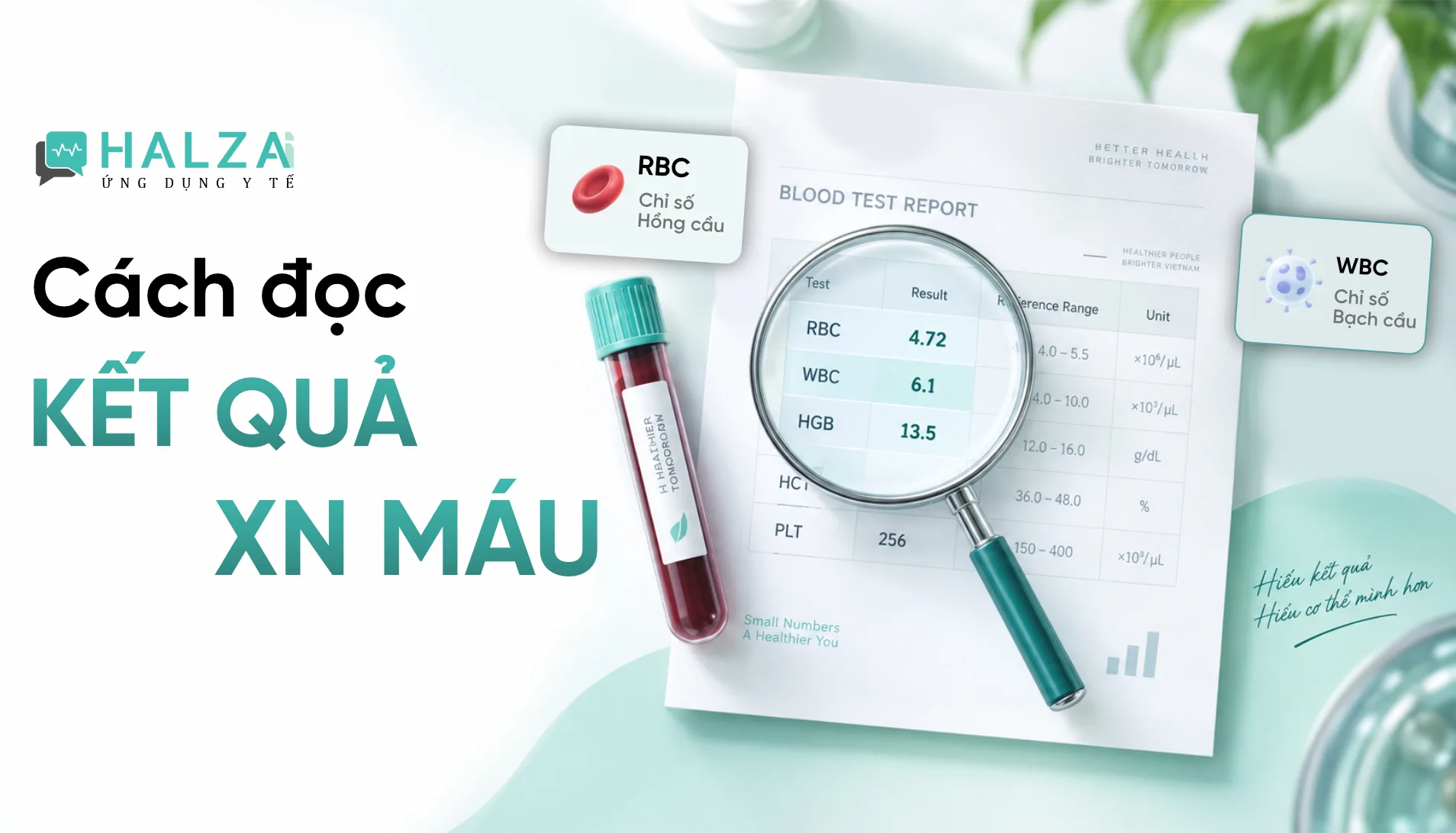

🩸Why do the RED BLOOD CELL and WHITE BLOOD CELL counts matter to your body?
Common blood test values
1. WBC – White blood cells
White blood cells are part of the immune system, helping the body fight infections and disease-causing agents.
A high WBC may be seen when the body has an infection or inflammation, or because of certain medicines.
A low WBC may be linked to many different causes, including certain medical conditions, medicines or problems affecting the production of blood cells.
You should not look at WBC on its own and conclude that you are “having an infection”. Doctors usually also look at the white cell differential and your current symptoms.
2. RBC, Haemoglobin and Haematocrit – The red cell group
Three values that usually appear together:
- RBC: the red blood cell count
- Haemoglobin – Hb/HGB: the protein in red blood cells that carries oxygen
- Haematocrit – HCT: the proportion of blood volume made up of red blood cells
When haemoglobin or the red cell values are low, your doctor may consider causes such as anaemia or iron deficiency.
Conversely, results above the reference range can also appear in some situations, such as dehydration.
The CBC also includes values such as MCV, MCH, MCHC, which help your doctor assess further characteristics of the red blood cells.
3. PLT – Platelets
Platelets take part in blood clotting and help the body stop bleeding after an injury.
A platelet count that is too low or too high may need further assessment, particularly when it comes with signs such as:
- Bruising easily
- Unusual bleeding
- Prolonged nosebleeds
- Many small red spots appearing on the skin
An abnormal PLT result on its own is not enough to identify the cause.
4. Glucose and HbA1c – Blood glucose
Glucose shows the amount of sugar in the blood at the moment the sample was taken.
Meanwhile, HbA1c reflects your average blood glucose over the past few months, so it is often used to support screening for or monitoring of diabetes.
One point that is easily confused is that glucose can be affected by whether or not you have eaten, whereas HbA1c usually does not require fasting.
If your blood glucose is high on one occasion, your doctor may need to repeat the test or carry out further tests before making a diagnosis.
5. Cholesterol, LDL, HDL and Triglycerides – Lipid profile
A lipid profile usually includes:
- Total Cholesterol: total cholesterol
- LDL-C: usually called the “bad” cholesterol
- HDL-C: usually called the “good” cholesterol
- Triglycerides: a form of fat in the blood
In general, a high LDL is linked to the risk of plaque building up in the arteries, while HDL has a role in carrying cholesterol out of the blood.
However, you should not look at a single number and draw conclusions about cardiovascular risk. Your doctor also considers your age, blood pressure, smoking, underlying conditions and family history.
6. AST, ALT, GGT and Bilirubin – The liver group
Tests commonly used to assess the liver include:
- AST
- ALT
- GGT
- ALP
- Bilirubin
- Albumin
ALT and AST are enzymes that are usually reviewed alongside several other values to assess the state of the liver.
The thing to remember is that raised liver enzymes do not automatically mean “severe liver disease”.
Medicines, supplements, alcohol, strenuous exercise and many other factors can also affect the results.
7. Creatinine and eGFR – Kidney function
Creatinine is a waste product made by the body and filtered out of the blood by the kidneys.
A raised creatinine may lead your doctor to consider that the filtering function of the kidneys is affected, but the result can also change with dehydration, muscle mass, diet or strenuous exercise.
For that reason, doctors usually do not look at creatinine on its own and may also review eGFR and other tests to assess kidney function more accurately.
How to read blood test results in 3 steps
If you have no medical training, you can read your test report in the following simple way:
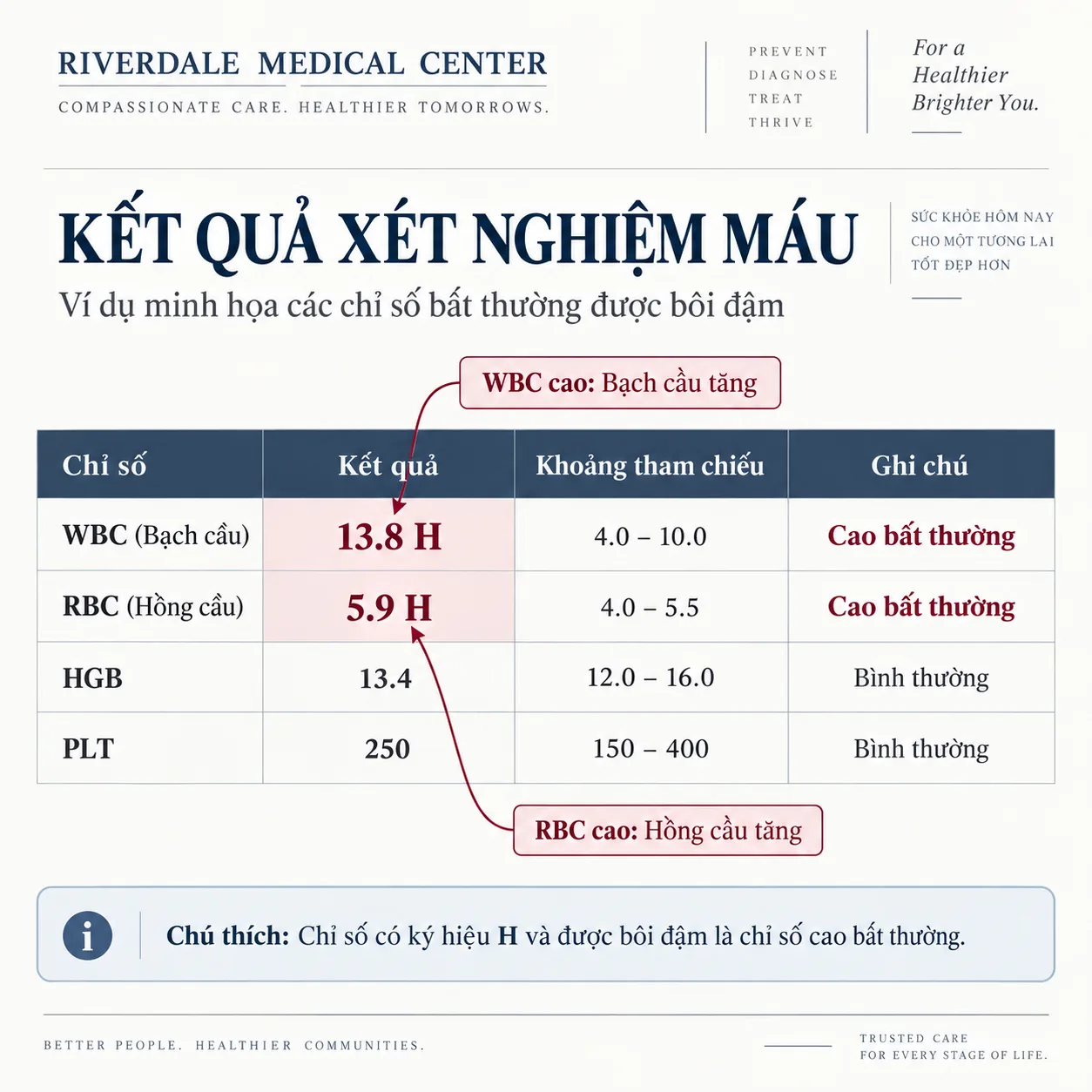
Step 1: Look for the values marked H or L, or the (abnormal) values, which will be shown in BOLD in your test results.
These are the values that fall outside the laboratory's reference range.
Step 2: See which group they belong to
For example:
- WBC, RBC, Hb, PLT → blood cells
- Glucose, HbA1c → blood glucose
- LDL, HDL, Triglycerides → lipid profile
- AST, ALT, GGT → liver
- Creatinine, eGFR → kidneys
Step 3: Do not diagnose yourself from a single number
Look at the result together with your symptoms, your earlier results and your doctor's advice.
Sometimes more valuable than a single result is the trend of change across several tests.
When should you talk to your doctor?
You should ask your doctor if:
- Several values are abnormal at the same time
- One value is considerably outside the reference range
- The results have changed markedly compared with your previous test
- You have symptoms such as marked tiredness, breathlessness, dizziness, yellowing of the skin, unusual bleeding or unexplained weight loss
- You are taking long-term medication or have an underlying condition
If a result is abnormal but you have no symptoms at all, there is no need to panic. In some cases the test simply needs to be repeated after a suitable interval.
Do not just read “high or low”
A common mistake when looking at blood tests is to focus only on the numbers printed in red.
In practice, doctors are usually interested in the relationship between several values.
For example, a low haemoglobin will be reviewed alongside RBC, HCT, MCV and other information. A raised ALT also needs to be reviewed alongside AST, GGT, bilirubin and your current state of health.
So:
Test results are data used to assess your health, not a complete diagnosis.
Save your test results to monitor your health long term
Rather than looking at a result once and then forgetting it, you should keep a record of each test so you can follow changes over time.
With Halza, you can store your health records and results, making it easy to review your information at an appointment or to follow your values across several check-ups.
Monitoring your health is not only about knowing whether today's numbers look “good”, but also about understanding how your body is changing over time.
The information in this article is for reference only and does not replace the advice, diagnosis or instructions of a doctor. Reference ranges and the meaning of results can differ from person to person and from laboratory to laboratory.
Frequently asked questions
What do the letters H and L on blood test results mean?
Usually:
- H – High: the result is above the reference range
- L – Low: the result is below the reference range
- Results with no marking are usually within the laboratory's reference range.
However, “high” or “low” is not enough to conclude that a disease is present.
Why does the same test have a different normal range in different places?
Reference ranges can vary with the laboratory, the measurement method, age, sex and a number of personal factors.
So when you read your results, give priority to the reference range printed on your own test report rather than comparing them with a number you found online.
Is one abnormal value something to worry about?
Not always.
Food and drink, strenuous exercise, dehydration, the medicines you are taking, menstruation or other temporary changes in the body can all affect test results.
References
- MedlinePlus – Complete Blood Count (CBC)
- MedlinePlus – Cholesterol Levels
- MedlinePlus – Liver Function Tests
- MedlinePlus – Creatinine Test
- MedlinePlus – Hemoglobin A1C Test
 Back to all articles


