


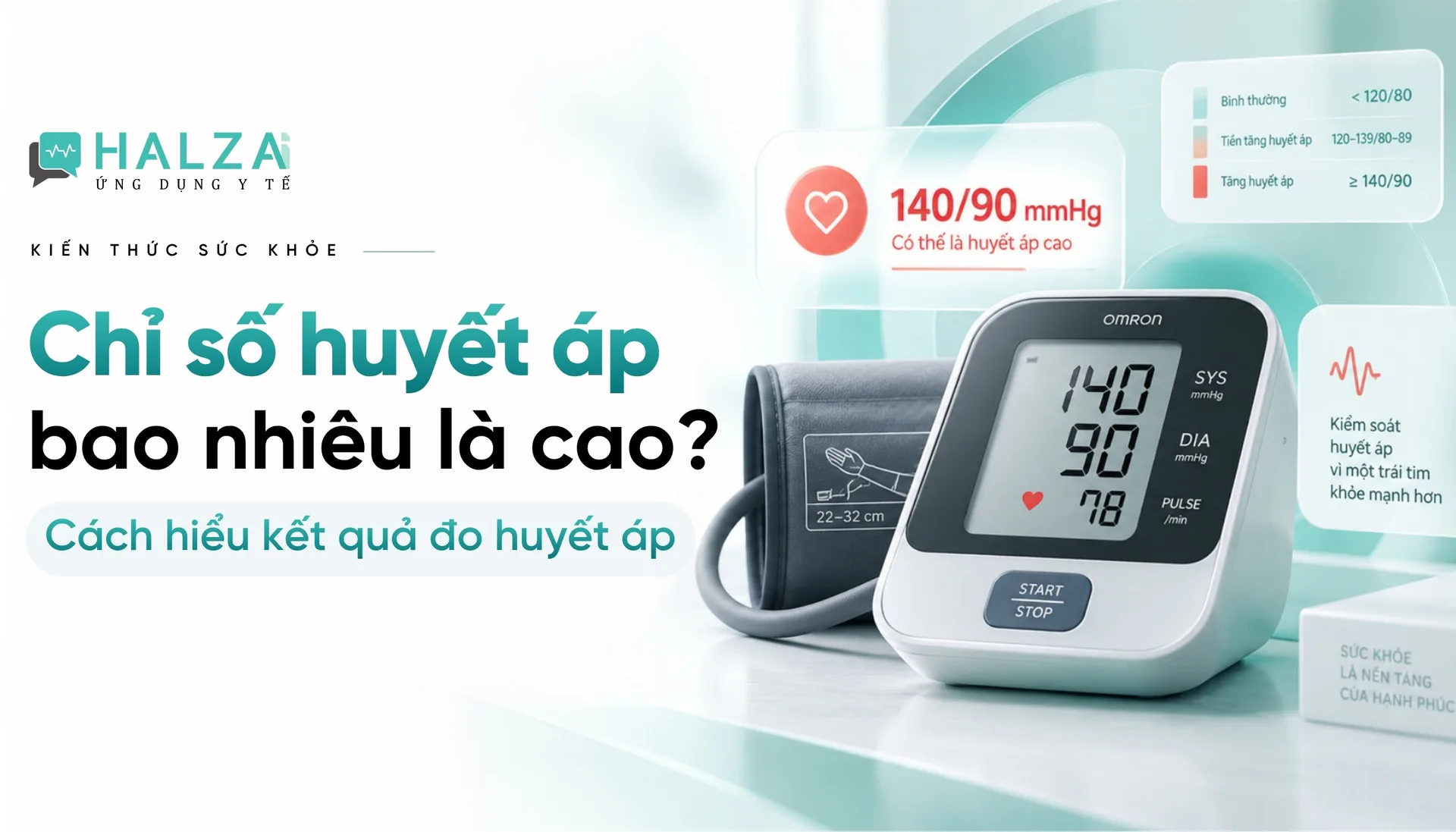

You have just measured your blood pressure and the monitor shows 130/85 mmHg. So is this reading normal, or is it already high?
Blood pressure is expressed as two numbers. The top number is the systolic blood pressure and the bottom number is the diastolic blood pressure.
One important point: you should not conclude on your own that you have high blood pressure from a single reading. Stress, coffee, exercise, the way you sit or even talking during the measurement can all change the result.
What do the two blood pressure numbers mean?
For example, say your reading is:
125/78 mmHg
125 – Systolic blood pressure
This is the pressure in the arteries when the heart contracts and pushes blood out.
78 – Diastolic blood pressure
This is the pressure in the arteries when the heart rests between two beats.
You should not pay attention only to the top number. Both the systolic and the diastolic pressure matter when assessing blood pressure.
What blood pressure reading counts as high?
Read according to the AHA classification:
Reading Category
<120 and <80 mmHg Normal
120–129 and <80 mmHg Elevated blood pressure
130–139 or 80–89 mmHg Stage 1 hypertension
≥140 or ≥90 mmHg Stage 2 hypertension
>180 and/or >120 mmHg Very high blood pressure, needs assessment straight away
The point that is easily confused lies in the word “or”.
For example:
- 135/75: the systolic value already falls into the stage 1 hypertension group under the AHA classification.
- 118/85: even though the top number is normal, a diastolic value of 85 still falls into the stage 1 hypertension group under the AHA classification.
- 145/82: a systolic value of 140 or above therefore falls into the stage 2 hypertension group under the AHA classification.
So do not look at only one of the two numbers.
Why does WHO say 140/90 while the AHA says 130/80?
This is a point that often causes confusion when you look for information online.
The AHA classifies 130–139/80–89 mmHg as stage 1 hypertension. WHO, on the other hand, defines high blood pressure in adults as blood pressure measured on two different days with a systolic blood pressure of ≥140 mmHg on both days and/or a diastolic blood pressure of ≥90 mmHg.
So you may see two websites using two different thresholds without either of them necessarily being “wrong”.
More important than a single number is whether the reading is repeated and what your overall cardiovascular risk is.
Does one high reading mean you have high blood pressure?
Not necessarily.
Blood pressure can rise temporarily when you:
- Have just had coffee or another caffeinated drink
- Have just exercised
- Smoke
- Are stressed or anxious
- Talk during the measurement
- Sit in the wrong position
- Position your arm incorrectly
The CDC also notes that some people have high blood pressure when it is measured at a healthcare facility but more normal readings when it is measured elsewhere, usually called the “white coat effect”.
So if the monitor shows a high reading once, do not panic, but do not ignore it either.
How should you measure blood pressure for a more accurate result?
A measurement taken in the wrong position can make you think your blood pressure is higher than it really is.
Before and during the measurement, you should:
- Rest before measuring
- Avoid caffeine, tobacco and exercise immediately before measuring
- Sit with your back supported
- Place both feet flat on the floor
- Do not cross your legs
- Rest your arm at chest level
- Wrap the cuff against bare skin, not over thick clothing
- Do not talk while the monitor is taking the reading
If you monitor at home, record your readings by date rather than just remembering a single number.
When does high blood pressure need particular attention?
If your blood pressure is above 180/120 mmHg, this is a very high level.
The AHA advises contacting a healthcare professional. If this level of blood pressure comes with signs such as chest pain, breathlessness, weakness or numbness, changes in vision or difficulty speaking, emergency assessment is needed straight away.
Apart from emergencies, you should also talk to your doctor if:
- Your blood pressure is regularly ≥140/90 mmHg
- Several readings fall in the range 130–139/80–89 mmHg
- Your readings have risen markedly compared with before
- You have cardiovascular disease, diabetes or kidney disease
- You are pregnant
- You are taking blood pressure medication
Do not focus on a single reading
A single blood pressure number is like a snapshot taken at one moment in time.
What doctors are usually more interested in is the trend:
118/76 → 125/80 → 132/84 → 138/86
tells you far more than an isolated reading of 138/86.
So if your blood pressure is starting to run higher than before, monitoring it regularly can help you spot the change early.
Tracking your blood pressure and health on Halza
With Halza, you can store your health records and information so you can review them conveniently whenever you need to.
Keeping your results across several check-ups makes it easier for you and your doctor to see the trend of change, rather than relying on a single reading.
Do not wait until you have symptoms before paying attention to your blood pressure. Knowing your numbers is the first step towards looking after your heart health proactively.
The information in this article is for reference only and does not replace the advice, diagnosis or treatment of a doctor. Blood pressure thresholds and treatment targets can differ according to each person's state of health, age, pregnancy and cardiovascular risk.
Frequently asked questions
Is a blood pressure of 120/80 normal?
According to the American Heart Association (AHA) classification, normal blood pressure in adults is:
Systolic below 120 mmHg and diastolic below 80 mmHg.
So a reading of exactly 120/80 mmHg no longer falls entirely within the “below 120 and below 80” group under this classification.
Is a blood pressure of 130/80 high?
According to the AHA, a systolic blood pressure of 130–139 mmHg or a diastolic blood pressure of 80–89 mmHg is classed as stage 1 hypertension.
However, WHO uses a threshold of ≥140/90 mmHg with readings recorded on two different days to diagnose high blood pressure in adults.
This means that guidelines may use different classification thresholds. A reading of 130/80 does not mean you have been diagnosed with high blood pressure, but it should not be taken lightly either if the same reading comes back several times.
Does high blood pressure cause symptoms?
Most people with high blood pressure have no clear warning signs.
You can still feel completely well even when your blood pressure is high. Measuring your blood pressure is the way to detect it.
References
- World Health Organization – Hypertension
- American Heart Association – Blood Pressure Explained
- American Heart Association – Understanding Blood Pressure Readings
- CDC – Measuring Your Blood Pressure
 Back to all articles


